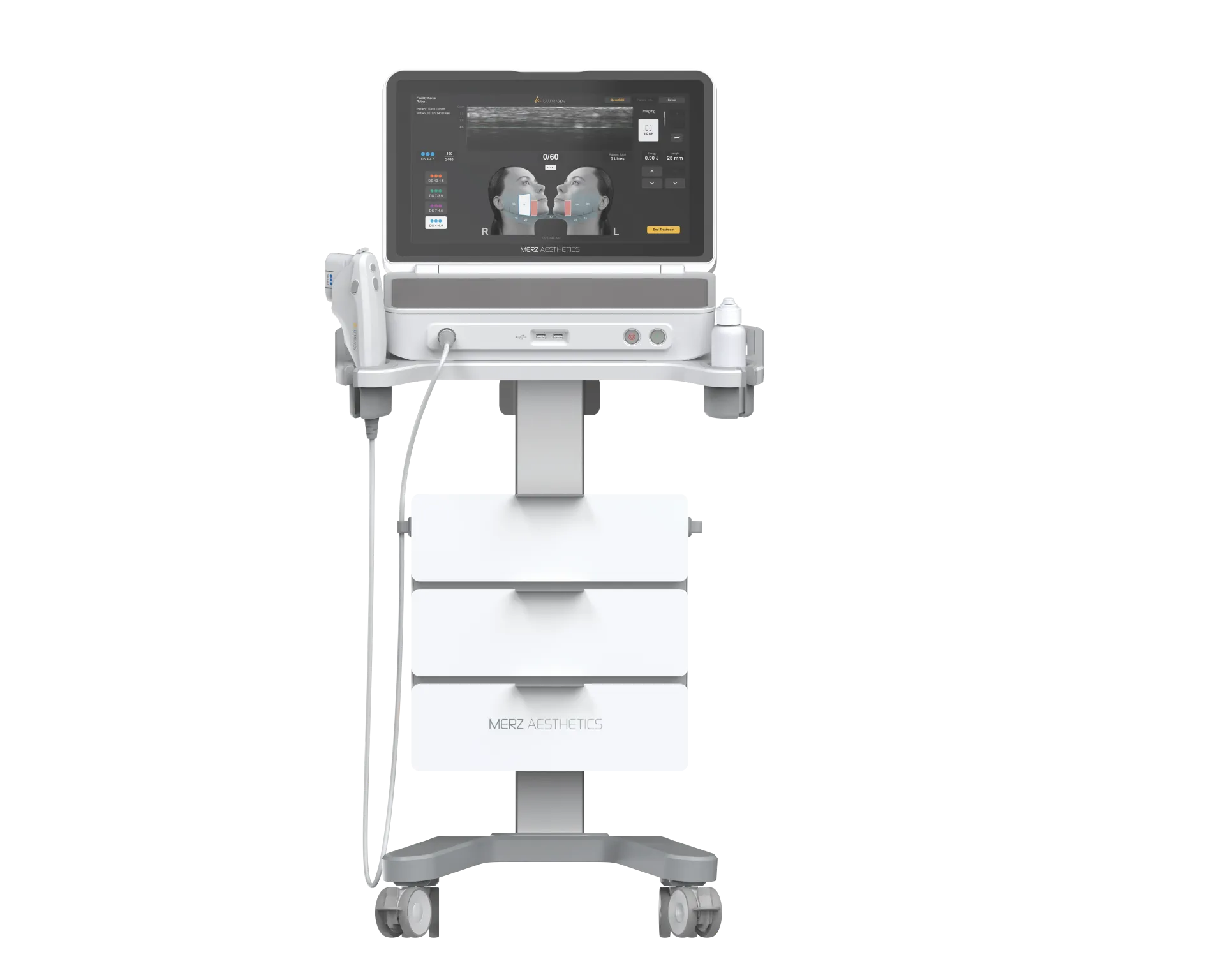
How Ultherapy Works: Micro-Focused Ultrasound Technology
Ultherapy uses micro-focused ultrasound with visualization (MFU-V) to deliver concentrated acoustic energy beneath the skin surface. The device generates ultrasound waves that converge at precise focal points, creating thermal coagulation zones measuring less than 1mm in diameter. These controlled micro-injuries heat tissue to 60-70 degrees Celsius at targeted depths of 1.5mm, 3.0mm, and 4.5mm, reaching the superficial muscular aponeurotic system (SMAS) without disrupting the epidermis.
The SMAS layer is the same tissue plane surgeons address during facelift procedures. By targeting this deep structural layer non-invasively, Ultherapy initiates a wound-healing cascade that produces new collagen and elastin fibers over the following 2-3 months. The integrated ultrasound imaging allows practitioners to visualize tissue layers in real time before delivering each pulse, ensuring energy reaches the intended depth with millimeter precision.
Who Benefits from Ultherapy Treatment
Ideal Candidates
Ultherapy is designed for patients aged 30-65 experiencing mild to moderate skin laxity in the face, neck, and decolletage. Ideal candidates notice early signs of sagging along the jawline, brow drooping, or loose neck skin but are not yet ready for surgical intervention. The treatment works across all Fitzpatrick skin types I through VI, making it suitable for a wide range of patients. Those with realistic expectations about gradual, natural-looking improvement over 2-3 months are the strongest candidates.
Contraindications
Patients with active skin infections, open wounds in the treatment area, or severe cystic acne should postpone Ultherapy until those conditions resolve. The procedure is not recommended for individuals with metallic implants in the treatment zone. Pregnant or nursing patients are advised to wait. Those with very advanced skin laxity requiring more than 5mm of tissue repositioning may achieve better outcomes with surgical approaches combined with energy-based maintenance.
What Happens During an Ultherapy Session
The treatment begins with cleansing the face and applying a thin layer of ultrasound gel. The practitioner places the Ultherapy transducer against the skin and uses the built-in imaging screen to identify the correct tissue depth before delivering energy. A full-face treatment requires 300-500 individual shots depending on the treatment plan and the number of zones covered. The forehead, temples, cheeks, jawline, submental area, and neck each receive targeted passes with specific transducer depths.
Session duration ranges from 60 to 90 minutes for a comprehensive full-face and neck protocol. Patients experience brief pulses of heat and tingling during energy delivery, with discomfort levels averaging 4-6 on a 10-point scale. Many clinics in Gangnam provide comfort measures including topical numbing cream applied 30-45 minutes before the session and oral analgesics to reduce sensation during treatment. No incisions, needles for the procedure itself, or general anesthesia are involved.
Ultherapy Results and Timeline
Initial skin tightening is visible immediately after treatment due to collagen contraction from thermal exposure. The primary lifting effect develops gradually over 2-3 months as the body generates new collagen fibers in response to the controlled micro-injuries. Peak results appear at 3-6 months post-treatment. Clinical studies demonstrate that 86% of patients show measurable improvement in skin laxity, with brow elevation averaging 1.5-2.0mm and jawline tightening visible on standardized photography.
Results from a single Ultherapy session last 12-18 months depending on the patient's age, skin condition, and lifestyle factors. Collagen degradation is an ongoing biological process, so periodic maintenance sessions every 12-18 months help sustain the lifting effect. At RE:BERRY Gangnam, Aesthetic Medicine Specialist Yoon-Gon Ryu designs individualized treatment protocols that may combine Ultherapy with complementary energy devices to address multiple tissue depths in a single visit.
Clinical Evidence Supporting Ultherapy
Ultherapy received FDA clearance in 2009 for non-invasive brow lifting, making it the first and only ultrasound device cleared for this indication. Subsequent clearances expanded to include the submental area and decolletage. Over 50 peer-reviewed studies and more than 4 million treatments worldwide support its safety and efficacy profile. Fabi et al. documented sustained tissue lifting at 180 days post-treatment with a single session protocol. Fabi SG et al. Dermatol Surg. 2013;39(6):899-906. doi:10.1111/dsu.12183